Works & worlds
Literature, visual works and audio-oriented formats; chapter-based publishing and structured creative context.
A living-story platform where writing, reading, communities and story-aware characters are designed as one connected product system.
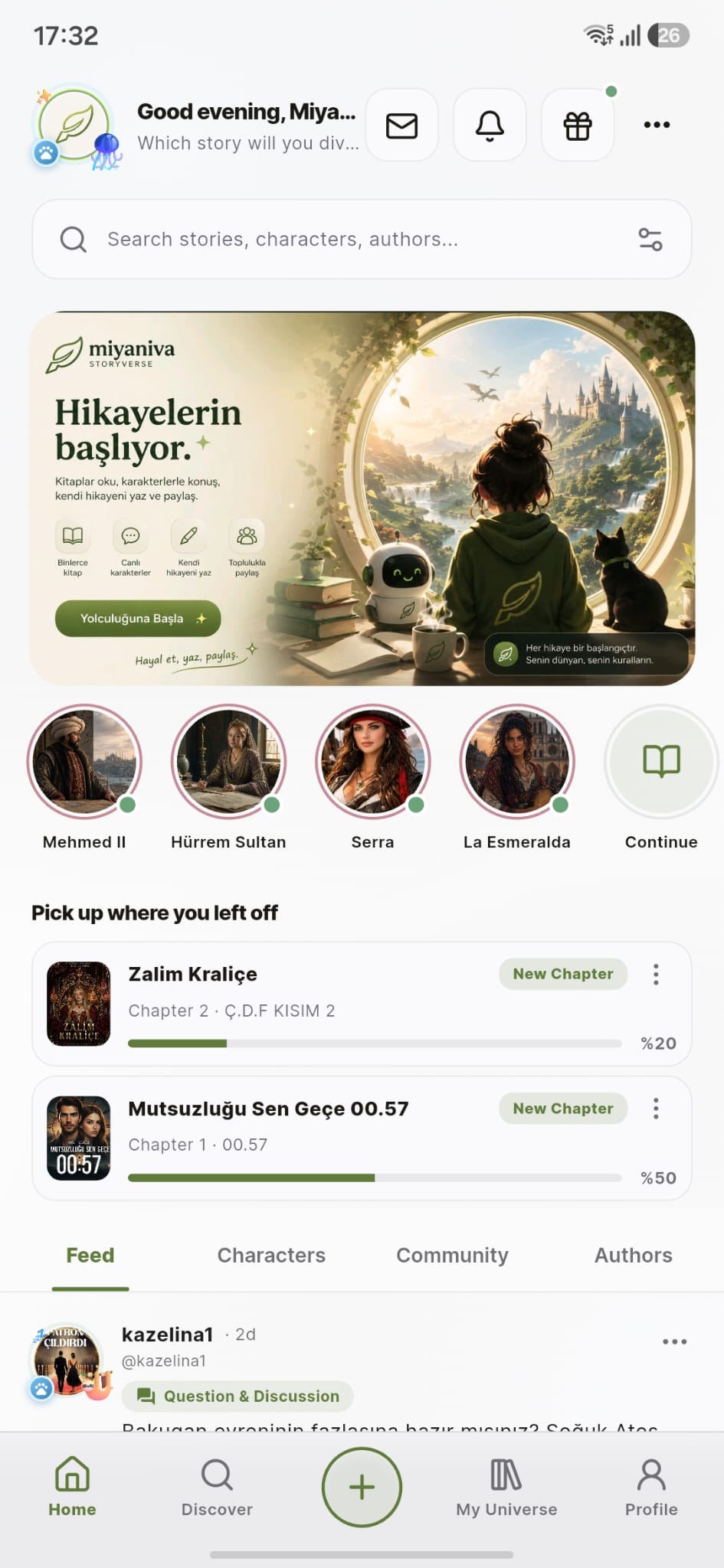
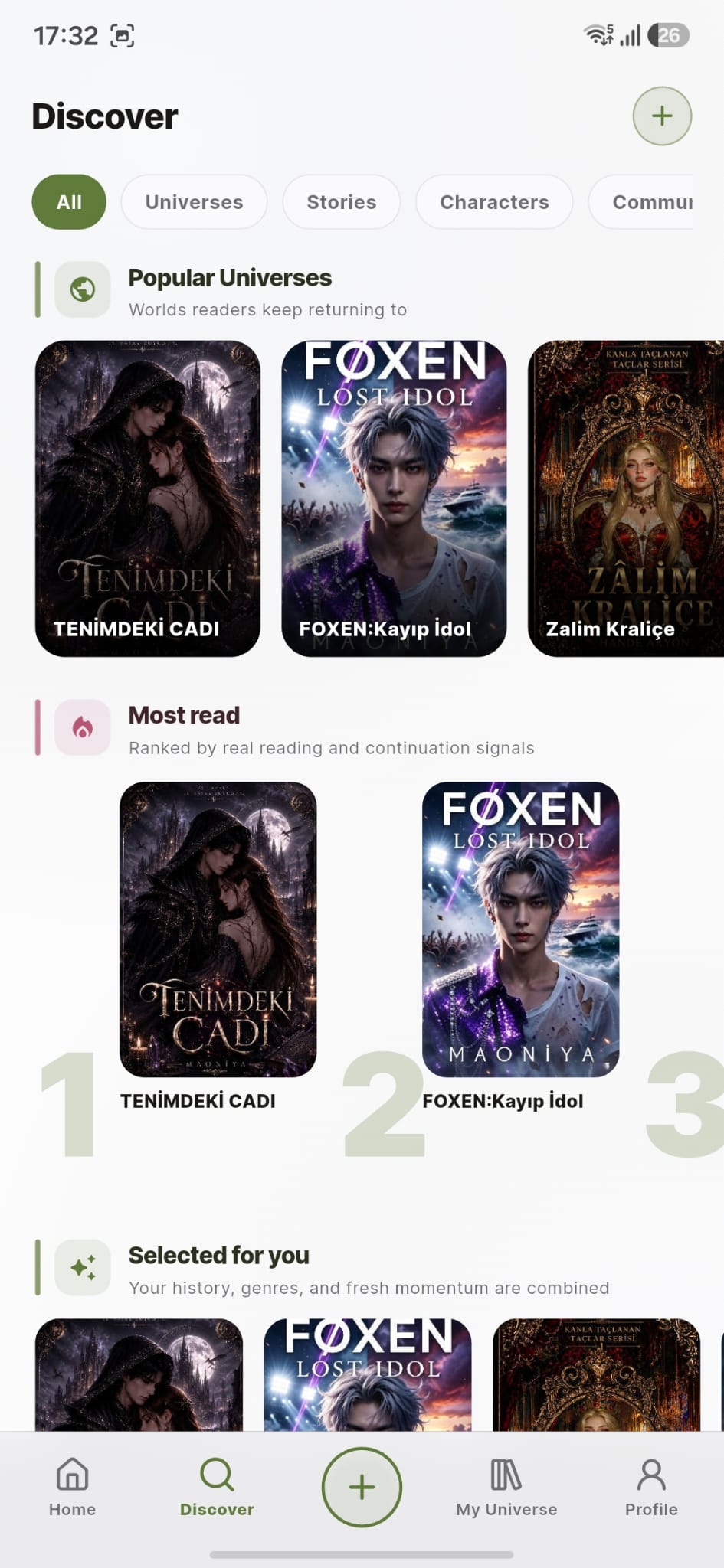
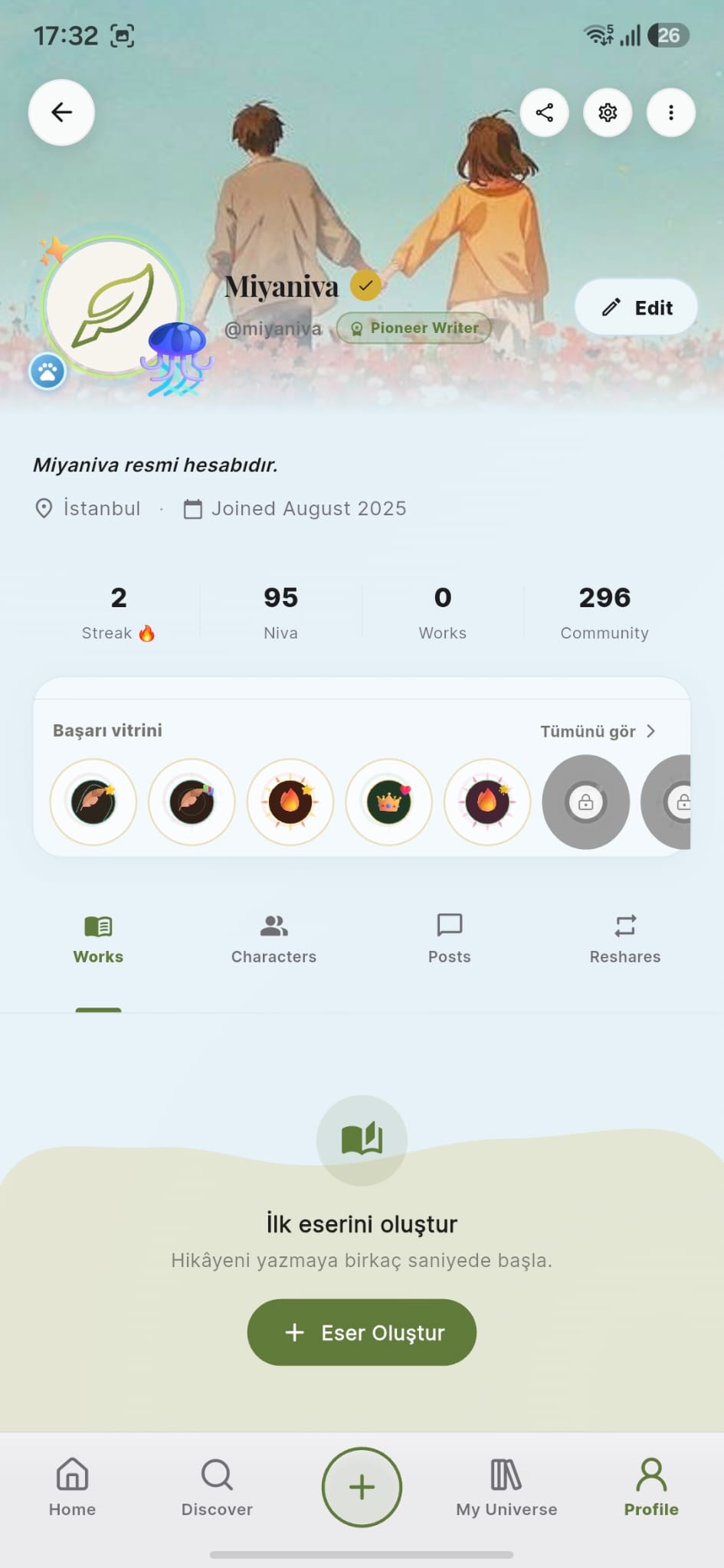
Miyaniva began with a product question: what if a digital story did not end when the reader reached the last line?
The project explores a connected creative environment in which writers can build stories and worlds, readers can discover and discuss them, and characters can become interactive surfaces that retain the context of their own universe. The product is intentionally broader than a writing tool: the long-term direction is a Writer’s OS built around story, identity, memory and community.
Digital reading products often separate creation, publication, discussion and character interaction into different places. Miyaniva is an attempt to design those layers as one coherent system: the story is the source, the world is the context, the community is the social layer and the character is an interactive interface to that world.
“The goal is not to add AI chat beside a book. The goal is to make the book’s world remain present after reading.”
Miyaniva combines writing and publishing, discovery and reading, personal libraries, communities, direct social interaction, characters and AI-assisted creative tooling. Instead of treating them as unrelated features, the product is designed around a loop: create → publish → discover → discuss → interact → return.
Literature, visual works and audio-oriented formats; chapter-based publishing and structured creative context.
Feed, discovery, library states, continuation signals and creator-facing public profiles.
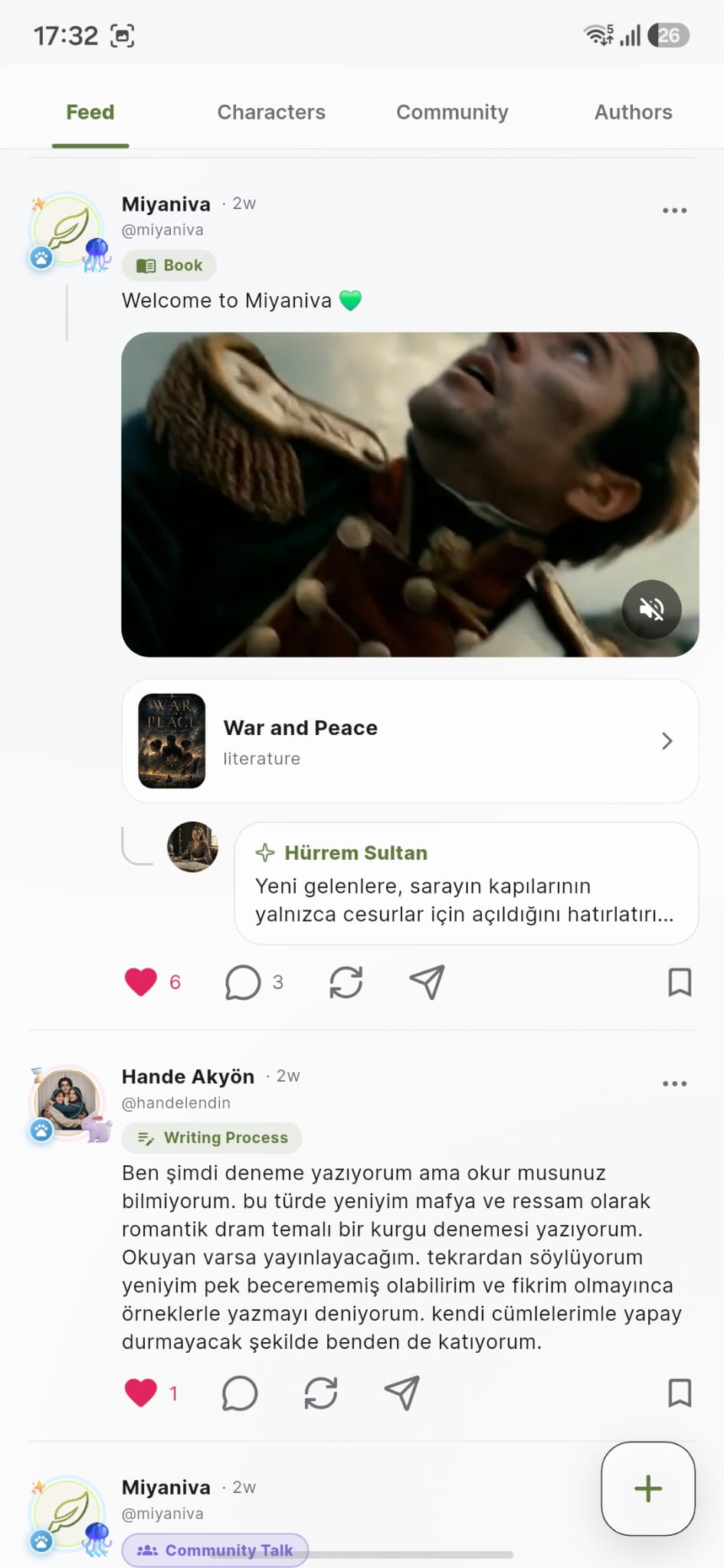
Discussion, posts, direct interaction and communities built around stories rather than generic social graphs.
Characters can be connected to a work or exist independently, with interaction shaped by their context and memory.
For Miyaniva, a character is not only a chatbot persona. The more interesting problem is context: what has happened in the work, what the character should know at a given point, what remains unavailable until later chapters and how memory can preserve continuity without breaking the author’s world.
I started Miyaniva as a solo product and have been responsible for product thinking, interface design, mobile/web implementation and the AI-oriented product architecture. That constraint shaped the engineering philosophy: keep the core understandable, automate repetitive operations, measure real usage and avoid adding infrastructure only because it looks impressive.
Real product screens, not concept renders.
Public milestones and selected decisions. The full work happens between the entries.
Preparing Miyaniva for the final/investment presentation stage at Bilişim Vadisi.
Community, social publishing and deeper character interaction move the product toward a broader living-story system.
Miyaniva entered the TÜBİTAK BiGG program hosted by Bilişim Vadisi.
Miyaniva begins as a solo build and starts taking shape across mobile, web and creative technology.
A story platform needs
places to belong.
Miyaniva’s social direction is built around creative context: readers discussing a universe, writers sharing process, characters becoming conversation surfaces and communities gathering around themes or works. The objective is not maximum feed volume; it is stronger return loops around stories people care about.
Community spaces are treated as product surfaces with purpose, not as an endless generic timeline.